Safety Systems & Decision-Making Purpose
This training explains how to make safe decisions on tree work sites.
It does not teach pruning techniques or climbing methods.
Instead, it focuses on:
- How work is planned
- How conditions are evaluated
- How decisions are adjusted when things change
- How and when to stop work
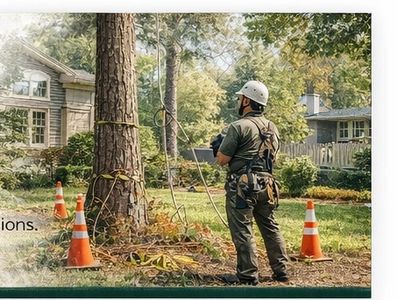
The goal is to support consistent, thoughtful decision-making in real-world conditions—the same judgment used in professional arborist work in Fort Hunt and Alexandria, Virginia.
Implementation of Safety Systems
What “Implementation” Means
Implementing safety systems means actively thinking through decisions, not relying on habit or routine.
Implementation includes:
- Paying attention to changing conditions
- Questioning assumptions
- Adjusting plans when something no longer feels right
- Choosing safety over convenience
Good safety decisions are about clear thinking, not speed.
How Safety Systems Work Together
Safety is not one thing. It is made up of several systems working at the same time:
- Planning the job
- Controlling the work area
- Communication
- Awareness of weather and surroundings
- Human factors such as fatigue and stress
- Clear authority to pause or stop work
If one system weakens, the others must compensate.
If they cannot, work must change or stop.

Before Work Begins: Planning & Assessment
Phase 1: Before Work Begins
Step 1 — Define the Work
Before starting, clearly identify:
- What work is planned
- What conditions must exist for work to proceed safely
- What outcomes are unacceptable
This establishes clear limits for decision-making.
Step 2 — Identify Decision-Relevant Hazards
Instead of listing every hazard, focus on those that:
- May change during the job
- Increase consequences
- Reduce control
Ask:
- What would cause the plan to change?
- What would require stopping work?
Step 3 — Identify System Dependencies
Ask:
- What systems must function correctly for this work to be safe?
Examples:
- Communication
- Site control
- Alert and focused personnel
- Stable environmental conditions
If the plan depends on everything going perfectly, it needs adjustment.

Active Work: Decisions, Stop-Work & Human Factors
Phase 4: Stop-Work Decisions
When to Stop Work
Stop work when:
- Controls are no longer effective
- Communication breaks down
- Fatigue affects judgment
- Conditions worsen
- Consequences increase
Stopping work is a planned safety action, not failure.
How to Stop Work
- Communicate clearly and early
- State the concern
- Pause without blame
- Reassess conditions together
Work resumes only after conditions improve or the plan changes.
Phase 5: Human Factors
Fatigue and Attention
Watch for:
- Slower reactions
- Missed details
- Overconfidence
- Rushing
Fatigue increases risk and must be addressed.
Differences in Experience
When experience levels vary:
- Increase communication
- Reduce risk tolerance
- Increase supervision
Plans should align with the least experienced person involved, not the most confident.

Professional Judgment, Ethics & Review
Phase 6: Ethics and Responsibility
Good decisions are also ethical decisions.
This training emphasizes:
- Avoiding unnecessary exposure
- Respecting personal and system limits
- Protecting coworkers and the public
- Taking responsibility for choices
Just because something can be done does not mean it should be done.
Phase 7: After the Job
After work concludes:
- Identify where decisions were required
- Discuss what worked well
- Note close calls
- Apply lessons to future work
Review improves future judgment.
Relationship to Other Training Sections
- Pruning School addresses how pruning work is performed
- Climbing School addresses how access and movement systems are used
- Safety Systems & Decision-Making addresses how and when work should proceed, change, or stop
These sections are intentionally separate to avoid overlap.

Training Context & Key Takeaways
Relationship to Other Training Sections
- Pruning School addresses how pruning work is performed
- Climbing School addresses how access and movement systems are used
- Safety Systems & Decision-Making addresses how and when work should proceed, change, or stop
These sections are intentionally separate to avoid overlap.
Training Context and Limitations
This training:
- Does not certify participants
- Does not replace employer safety programs
- Does not eliminate risk
Risk is reduced through better thinking and decision-making, not instruction alone.
Instruction
Instruction is provided through School of Trees, operated by Sean Harman’s Tree Care, based on field experience and accepted arboricultural practices.
Core Takeaway
Good safety decisions are repeatable.
This training supports consistent, thoughtful decision-making when conditions change.
Scope & Intended Use
This material is intended to support safe, informed decision-making in professional tree care environments. Content reflects field-tested practices, risk awareness, and judgment-based workflows used by experienced arborists.
This page does not replace site-specific assessments, formal credentials, or applicable industry standards. Conditions vary by tree, site, and situation.