School of Trees
Home
Pruning School
Climbing School
School of Trees
Home
Pruning School
Climbing School
More
  • Home
  • Pruning School
  • Climbing School
  • Home
  • Pruning School
  • Climbing School

Pruning School

What Should Be Pruned (Decision-Making Before the Cut)

Professional pruning starts with knowing what to remove — and what to leave. Not every branch that looks problematic should be cut. Poor decision-making causes more long-term damage than poor cutting technique.

Before making any cut, identify which category the branch falls into.

Dead Branches


Deadwood should almost always be removed.

Indicators of dead branches:

  • No buds or leaf scars
     
  • Brittle wood
     
  • Peeling bark
     
  • Fungal growth on the branch
     
  • Failure to leaf out during the growing season
     

Deadwood can be pruned at any time of year and does not affect tree energy reserves.

Diseased or Infected Branches

Branches showing disease symptoms should be selectively removed only when pruning will reduce spread or risk.

Common signs:

  • Cankers
     
  • Discolored or sunken bark
     
  • Oozing sap
     
  • Wilted or stunted foliage
     
  • Fungal fruiting bodies on branches
     

Best practices:

  • Sterilize tools between cuts
     
  • Avoid excessive removal
     
  • Do not prune aggressively during active disease periods unless necessary


Dead Branches

Deadwood should almost always be removed.

Indicators of dead branches:

  • No buds or leaf scars
     
  • Brittle wood
     
  • Peeling bark
     
  • Fungal growth on the branch
     
  • Failure to leaf out during the growing season
     

Deadwood can be pruned at any time of year and does not affect tree energy reserves.

Diseased or Infected Branches

Branches showing disease symptoms should be selectively removed only when pruning will reduce spread or risk.

Common signs:

  • Cankers
     
  • Discolored or sunken bark
     
  • Oozing sap
     
  • Wilted or stunted foliage
     
  • Fungal fruiting bodies on branches
     

Best practices:

  • Sterilize tools between cuts
     
  • Avoid excessive removal
     
  • Do not prune aggressively during active disease periods unless necessary


Broken, Cracked, or Hanging Branches

Structural damage should be addressed promptly.

These branches:

  • Create immediate safety hazards
     
  • Tear bark further in wind
     
  • Provide entry points for decay
     

Use proper weight reduction and controlled removal techniques to avoid additional damage.

Crossing, Rubbing, or Touching Branches

Branches that rub together create wounds that never heal properly.

Pruning goals:

  • Remove the lower-value or poorly attached branch
     
  • Preserve spacing between limbs
     
  • Improve airflow and light penetration
     

Never remove both branches unless structurally necessary. 


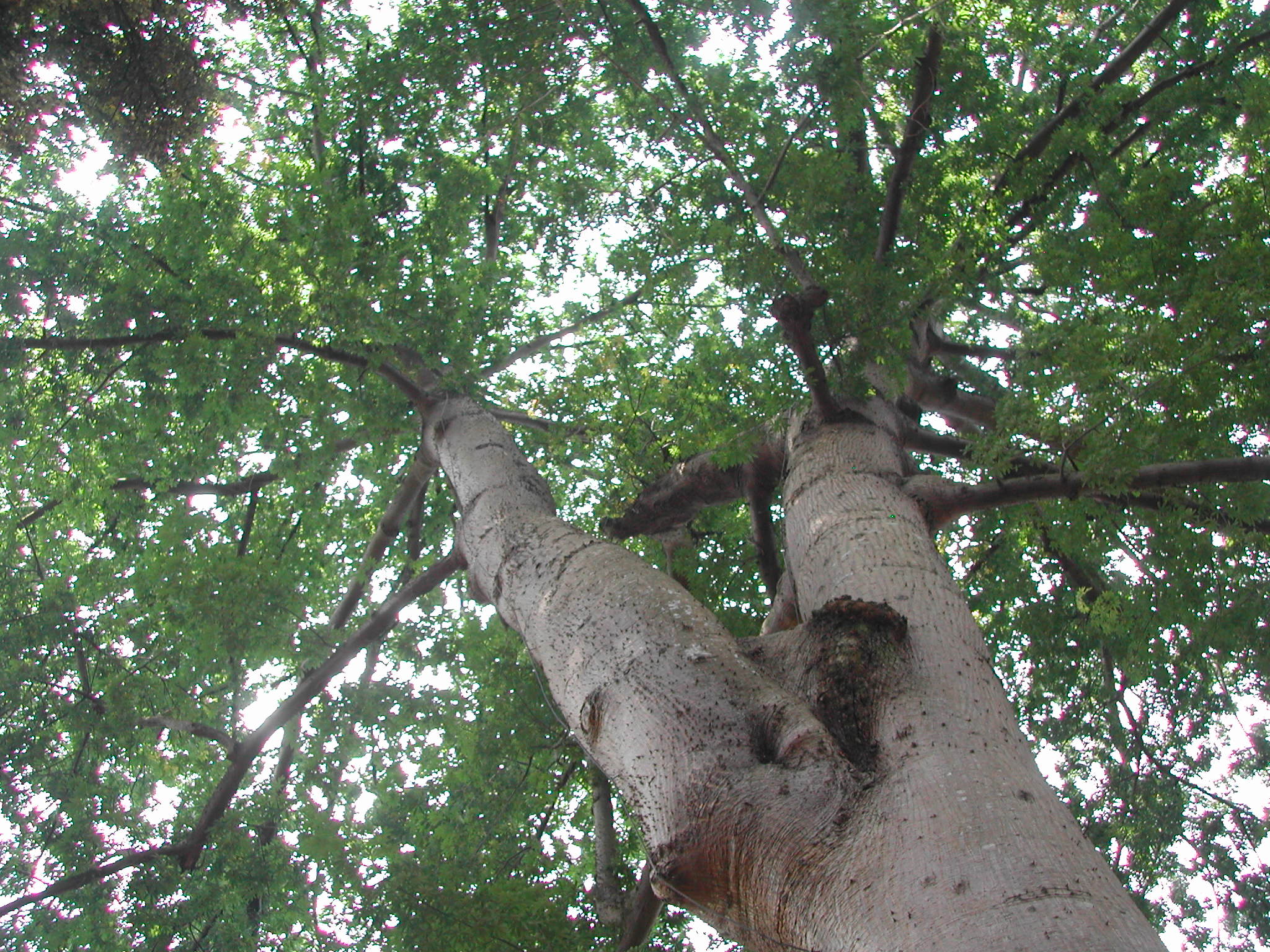
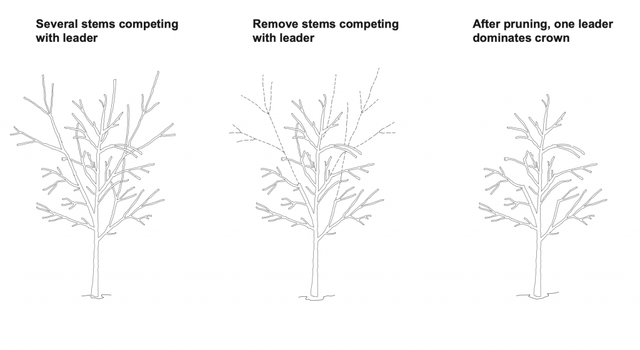
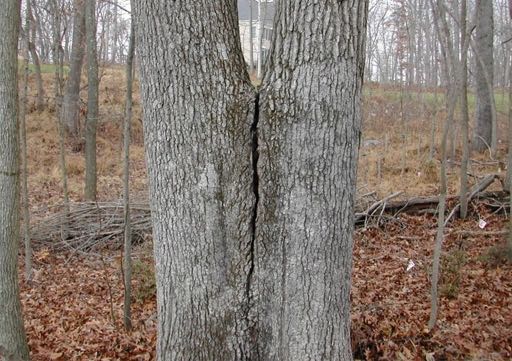
Structurally Competing Leaders

Co-dominant leaders compete for dominance and weaken structure over time.

Best practices:

  • Subordinate one leader early
     
  • Avoid topping
     
  • Use reduction to guide structure
     
  • Maintain a single dominant leader where appropriate
     

https://www.cherokeetreecare.com/wp-content/uploads/Codominant-Leaders-in-Trees2.jpghttps://www.bartlett.com/blog/wp-content/uploads/2021/09/codominant-1-1.jpghttps://lirp.cdn-website.com/96c60e04/dms3rep/multi/opt/Pruning%2Byoung%2Btrees-640w.png6  

What Should NOT Be Pruned

Equally important is knowing what not to cut.

Do not prune:

  • Healthy, well-attached scaffold branches without purpose
     
  • Large diameter live limbs unnecessarily
     
  • Branches solely for appearance
     
  • Interior growth that supports structure
     
  • Branches needed for energy production
     

Every cut reduces stored energy.

Pruning Priority Order (Climber Reference)

  1. Safety hazards
     
  2. Deadwood
     
  3. Broken or damaged limbs
     
  4. Diseased branches (when appropriate)
     
  5. Structural defects
     
  6. Clearance issues
     
  7. Aesthetic refinement
     

If time or access is limited, stop after addressing structure and safety.


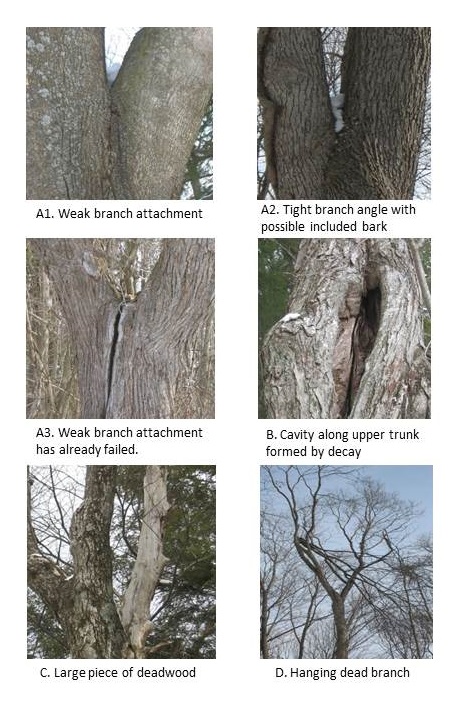
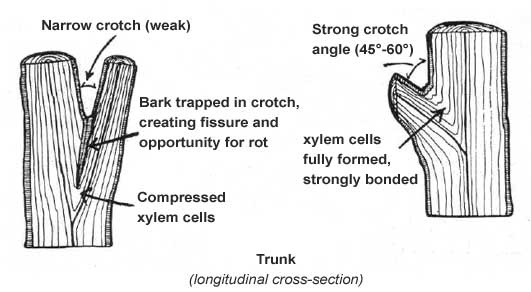
Poorly Attached Branches

Branches with:

  • Narrow attachment angles
     
  • Included bark
     
  • Weak unions
     

…should be subordinated or removed early to prevent future failure.

Early correction is far more effective than late-stage removal.

https://www.eastsidetreeworks.com/blog/wp-content/uploads/2013/03/branchunion.jpghttps://stormwise.media.uconn.edu/wp-content/uploads/sites/1508/2016/02/Tree-defects-ppt-pics1.jpghttps://www.phillyorchards.org/wp-content/uploads/2016/01/crotch-angles.jpg6  

Excessive Suckers and Watersprouts

Suckers and watersprouts:

  • Grow rapidly
     
  • Attach weakly
     
  • Increase maintenance needs
     
  • Disrupt structure
     

Remove selectively, focusing on:

  • Reducing density
     
  • Preserving desirable structure
     
  • Avoiding excessive live tissue removal
     

Branches Creating Clearance Issues

Prune branches that interfere with:

  • Buildings
     
  • Rooflines
     
  • Walkways
     
  • Driveways
     
  • Utility lines
     

Clearance pruning should:

  • Maintain natural form
     
  • Avoid lion-tailing
     
  • Use reduction cuts instead of removal when possible


Final Decision Rule

Before cutting, ask:

  • Is this branch dead, damaged, diseased, or defective?
     
  • Does removing it improve long-term structure?
     
  • Will this cut reduce future risk?
     
  • Is this the smallest, cleanest cut possible?
     

If the answer is unclear — do not cut.


 Pruning principles taught here are applied in professional field work by ISA Certified Arborist Sean Harman in Alexandria, Virginia. 

Copyright © 2026 School of Trees - All Rights Reserved.

Powered by

  • About the Instructor

This website uses cookies.

We use cookies to analyze website traffic and optimize your website experience. By accepting our use of cookies, your data will be aggregated with all other user data.

Accept